
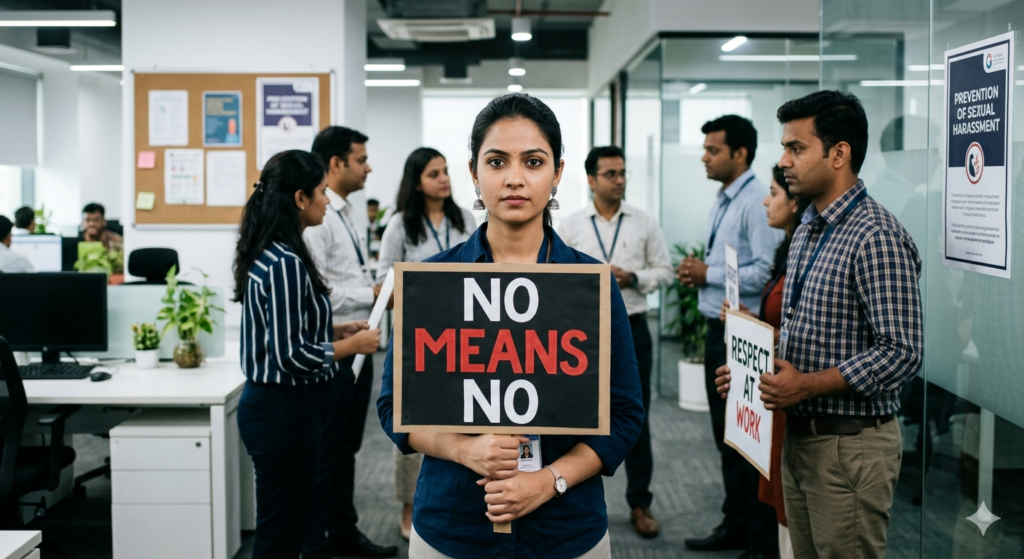
Creating a safe and respectful workplace is no longer just a good business practice. It is a legal, ethical, and organisational necessity. The prevention of sexual harassment at workplace is a responsibility shared by employers, leaders, managers, and employees alike. More importantly, the prevention of sexual harassment at the workplace forms the foundation of a healthy work culture where people feel respected, protected, and valued.
At MahaPOSH, we work closely with organisations across industries to strengthen compliance, build awareness, and create workplaces where dignity and respect are non-negotiable. While many companies have policies in place, true prevention requires continuous effort, education, accountability, and commitment from everyone involved.
In this comprehensive guide, we explore what workplace sexual harassment means, why prevention matters, employer obligations under the POSH Act, employee responsibilities, and practical steps organisations can take to create safer workplaces.
Understanding Sexual Harassment at the Workplace
Before discussing prevention, it is important to understand what constitutes sexual harassment.
Under the Sexual Harassment of Women at Workplace (Prevention, Prohibition and Redressal) Act, 2013, sexual harassment includes any unwelcome act or behaviour of a sexual nature, whether direct or implied.
This may include:
- Physical contact and advances
- Requests or demands for sexual favours
- Sexually colored remarks
- Unwelcome jokes, comments, or gestures
- Showing pornography or explicit content
- Stalking or repeated unwanted communication
- Intrusion into personal privacy
- Any conduct that creates an intimidating, hostile, or offensive work environment
Sexual harassment is not always physical. It can be verbal, non-verbal, digital, psychological, or emotional. Even a seemingly casual comment may constitute harassment if it is unwelcome and makes the recipient uncomfortable.
Why Prevention Matters More Than Correction
Many organisations focus heavily on complaint handling after an incident occurs. While effective redressal mechanisms are essential, the real goal should be preventing incidents from happening in the first place.
The prevention of sexual harassment at the workplace offers benefits that extend far beyond legal compliance.
Protects Employee Well-Being
Employees who feel safe at work are more likely to contribute confidently, collaborate effectively, and perform at their best.
Builds Trust
A workplace that prioritises safety demonstrates that employee welfare is taken seriously. This strengthens trust between employees and leadership.
Enhances Productivity
Fear, stress, and anxiety resulting from workplace harassment can significantly impact productivity and engagement.
Strengthens Employer Brand
Organisations known for ethical practices and employee protection attract stronger talent and enjoy better retention rates.
Reduces Legal and Financial Risks
Failure to comply with POSH regulations can lead to penalties, reputational damage, legal complications, and employee attrition.
The Legal Framework Behind Workplace Safety
In India, the primary legislation governing workplace sexual harassment is the POSH Act, 2013.
The Act was introduced to provide protection against sexual harassment and establish mechanisms for prevention, prohibition, and redressal.
The law applies to:
- Private organizations
- Public sector organizations
- Startups
- Educational institutions
- NGOs
- Hospitals
- Remote and hybrid workplaces
- Contractual and temporary workers
The legislation makes the prevention of sexual harassment at workplace a mandatory responsibility for employers, not merely a recommendation.
Employer Responsibilities Under the POSH Act
Employers play the most significant role in creating a safe workplace.
The law outlines several obligations that organisations must fulfil.
Establish a Comprehensive POSH Policy
Every organisation should have a clearly documented anti-sexual harassment policy.
The policy should define:
- What constitutes sexual harassment
- Employee rights and responsibilities
- Complaint procedures
- Investigation mechanisms
- Consequences of misconduct
The policy must be communicated regularly and made easily accessible to all employees.
Constitute an Internal Committee (IC)
Organisations with ten or more employees are legally required to form an Internal Committee.
The IC is responsible for:
- Receiving complaints
- Conducting inquiries
- Recommending actions
- Maintaining confidentiality
- Ensuring fair investigation processes
An improperly constituted IC can lead to non-compliance and legal challenges.
Conduct Regular POSH Training
Training remains one of the most effective tools for the prevention of sexual harassment at workplace.
Many incidents occur because employees fail to recognise inappropriate conduct or are unaware of reporting mechanisms.
Regular training should cover:
- Understanding workplace harassment
- Recognising inappropriate behaviour
- Bystander intervention
- Complaint procedures
- Rights of complainants and respondents
Training should not be a one-time event. Continuous awareness is essential.
Display POSH Information Prominently
Organisations should display information about:
- POSH policy
- IC members
- Complaint procedures
- Employee rights
This ensures transparency and encourages reporting.
Maintain a Safe Work Environment
Employers must take proactive steps to eliminate situations that could enable harassment.
This includes:
- Safe office spaces
- Appropriate workplace conduct guidelines
- Secure reporting mechanisms
- Protection from retaliation
Building a Culture That Prevents Harassment
Policies alone do not create safe workplaces.
Culture does.
One of the most effective ways to strengthen the prevention of sexual harassment at workplace is to cultivate a culture where respect becomes part of everyday behaviour.
Leadership Must Set the Tone
Employees observe leadership behaviour closely.
When leaders consistently demonstrate professionalism, accountability, and respect, employees are more likely to follow suit.
Leadership commitment should be visible, authentic, and continuous.
Encourage Open Communication
Employees should feel comfortable discussing concerns without fear of judgment or retaliation.
Anonymous reporting channels, open-door policies, and regular feedback mechanisms can encourage transparency.
Address Misconduct Promptly
Ignoring inappropriate behaviour sends the wrong message.
Even seemingly minor incidents should be addressed quickly before they escalate into larger problems.
Promote Inclusivity
Inclusive workplaces often experience fewer incidents of harassment because employees are taught to respect differences and value diversity.
Employee Responsibilities in Preventing Sexual Harassment
While employers carry significant legal responsibilities, employees also play a vital role in creating respectful workplaces.
Understand the Policy
Every employee should familiarise themselves with the organisation’s POSH policy.
Knowing rights and reporting procedures ensures timely action when required.
Respect Professional Boundaries
Maintaining professional conduct is essential.
Comments, jokes, messages, or gestures that seem harmless to one person may be uncomfortable for another.
Report Concerns Early
Employees should report inappropriate behavior promptly.
Early reporting allows organisations to intervene before situations worsen.
Support Colleagues
Witnesses and bystanders can contribute significantly to the prevention of sexual harassment at workplace by speaking up and supporting affected colleagues.
What Employees Should Do If They Experience Harassment
Harassment feels emotionally assaultive.
However, taking the right steps can strengthen the complaint process.
Clearly Communicate Discomfort
If safe and appropriate, tell the individual that their behaviour is unwelcome and must stop.
Document Every Incident
Maintain records including:
- Dates
- Times
- Locations
- Witnesses
- Messages
- Emails
- Screenshots
Documentation is useful during investigations.
Approach the Internal Committee
These complaints will be adequately addressed by the Internal Committee.
Employees should present complaints within the prescribed timeline under the POSH Act.
Use Available Government Platforms
The Ministry of Women and Child Development has digital grievance mechanisms such as the SHe-Box platform, which enables employees to file and track complaints.
Challenges Organisations Commonly Face
All of us must work to ensure that prevention measures are implemented, but we know that for a lot of organisations, that isn’t easy.
Lack of Awareness
Employees often miss what constitutes harassment.
Fear of Reporting
Victims may worry about retaliation, career impact, or social stigma.
Inadequate Training
Generic training sessions often struggle to cope with real workplace scenarios.
Poor Documentation
Hence, incomplete records and procedural mistakes can hamper a study.
Token Compliance
Some organisations are concerned only with meeting legal requirements, and there are no meaningful workplace safety programs.
Best Practices for Prevention
Organisations looking to better their outcomes should do the following.
Conduct Annual POSH Audits
Organisational compliance gaps are highlighted with regular audits.
Train Managers Separately
Managerial training is necessary, as they are often the first point of contact for employees with concerns.
Use Scenario-Based Learning
Real-life examples help in understanding and retention.
Strengthen Digital Workplace Guidelines
As hybrid and remote work models become common, organisations should have a clear set of rules for virtual interactions.
Measure Effectiveness
Track awareness levels, training participation, employee feedback, and reporting trends.
We can observe the long-term effects of continuous measurement.
The Role of MahaPOSH in Creating Safer Workplaces
At MahaPOSH, we believe that the prevention of sexual harassment in the workplace goes beyond compliance checklists.
Our approach is grounded in legal experience and practical implementation, employee awareness and education, and the development of organisational culture.
We support organisations through:
- POSH policy drafting and review
- Internal Committee formation
- IC training and certification
- Employee awareness programs
- POSH sessions for managers
- Annual compliance support
- External Member Services
- Annual report preparation
- End-to-end POSH compliance management
Our goal is simple: help organisations create workplaces where all employees feel safe, respected, and heard.
The Future of Workplace Safety
Workplaces are changing at an exponential rate. Hybrid work, digital communication, flexible teams, and global collaboration have also brought new opportunities and new challenges.
The prevention of sexual harassment in the workplace needs to evolve alongside these changes.
Organisations that are more aware of what employees are doing day-to-day to develop, be responsible and respectful at work today will be better equipped to attract talent, build employee trust, and foster sustainable growth tomorrow.
Creating a safe workplace is not a one-time initiative. It is an ongoing commitment.
When employers, managers, and employees work together, organisations become stronger, healthier, and more resilient.
Conclusion
The prevention of sexual harassment at workplace is one of the foremost responsibilities an organisation has to take. It protects individuals, strengthens the culture, increases productivity, and ensures compliance with the law.
Policies, training, Internal Committees, leadership accountability, and employee awareness all play a role in creating safer work environments.
At MahaPOSH, we partner with organisations to turn compliance into culture. Because every employee deserves a workplace based on dignity, respect, and trust.
The true measure of a workplace is not how it reacts to harassment after it happens, but how effectively it prevents it from happening in the first place.