
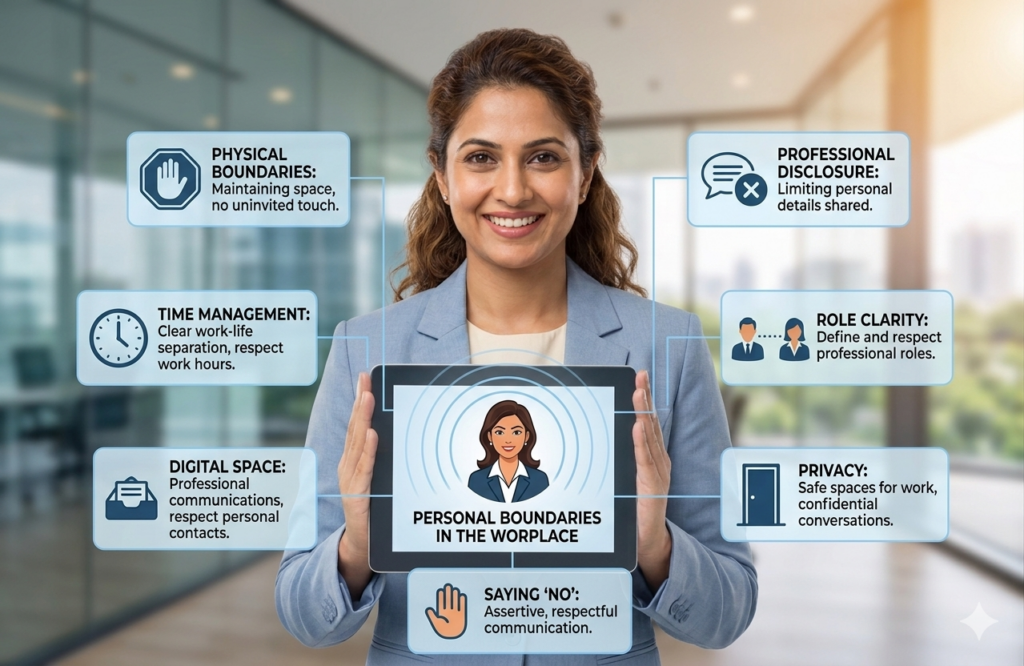
Workplaces have changed dramatically in the last few years. Hybrid work, instant communication tools, tighter deadlines and high performance expectations have blurred professional and personal life. In such an environment, personal boundaries in the workplace are no longer optional. They are essential. Strong personal boundaries in the workplace protect employees from burnout, enhance workplace relationships and foster a good organizational culture.
At MahaPOSH, we believe that creating safe, respectful, and inclusive workplaces goes beyond compliance. It starts with understanding how people interact, communicate, and respect each other’s limits. Personal boundaries are at the heart of how we build workplaces in which people feel valued, respected, and psychologically safe.
What Are Personal Boundaries in the Workplace?
Personal boundaries in the workplace are the limits that people set to protect their time, energy, privacy, emotional well-being and professional obligations. They define what is acceptable and unacceptable in workplace interaction.
These boundaries help employees maintain a healthy balance between their professional commitments and personal lives. They also set clear expectations for colleagues, managers, clients, and stakeholders.
If we don’t have boundaries, employees may be constantly available, overwhelmed by excessive workloads, engaged in uncomfortable conversations and unable to separate work stress from their personal lives.
Simply put, personal boundaries create clarity. They teach all people how to work in a respectful manner.
Why Are Personal Boundaries Important at Work?
Many professionals are afraid of putting boundaries on the table because they don’t want to be seen as uncooperative or less committed. Healthy boundaries are not just about boundaries; in reality, they make employees more productive, engaged, and focused.
The key benefits of such a system?
Prevents Burnout
Constantly responding to emails after work, taking on extra tasks, or remaining available around the clock can quickly lead to exhaustion.
Healthy boundaries allow people to rest and recover and return to work fresh and energized with renewed focus.
Improves Mental Health
Employees who establish clear limits experience lower stress levels and better emotional well-being.
When people know they can disconnect from work and protect their personal time, they are more likely to maintain positive mental health.
Encourages Mutual Respect
Respecting personal boundaries in the workplace demonstrates professionalism.
When employees respect each other’s boundaries, workplace relationships become stronger and more collaborative.
Enhances Productivity
Contrary to popular belief, working longer hours does not always produce better results.
Employees who protect their focus time and manage distractions effectively often deliver higher-quality work in less time.
Supports Inclusive Work Cultures
Organisations that promote healthy boundaries establish an environment where employees feel comfortable speaking up, expressing concerns and participating without fear of judgment or pressure from management.
This drives a better workplace culture and employee satisfaction.
The Different Types of Personal Boundaries in the Workplace
Not all boundaries are the same. Every employee needs to focus on different things depending on their role, personality and circumstances.
Time Boundaries
Time boundaries define when work begins and ends.
Examples include:
- Logging off at the end of the day.
- Taking uninterrupted lunch breaks.
- Not discussing work during vacations.
- Protecting weekends and personal time.
When time boundaries are respected, employees can maintain a healthier work-life balance.
Communication Boundaries
Communication boundaries define how and when people want to communicate.
Examples include:
- Using email instead of personal messaging apps.
- Setting expectations about response times.
- Limiting non-urgent messages after work hours.
- Deciding how much personal information to share with colleagues.
Clear communication boundaries reduce misunderstandings and unnecessary stress.
Workload Boundaries
Workload boundaries allow employees to manage their responsibilities realistically.
Examples include:
- Discussing priorities when workloads become excessive.
- Negotiating timelines.
- Clarifying job responsibilities.
- Politely declining additional tasks when capacity is full.
Workload boundaries ensure employees can maintain quality without being overwhelmed.
Emotional Boundaries
Emotional boundaries protect individuals from carrying the emotional burden of others.
Examples include:
- Avoiding workplace gossip.
- Maintaining professionalism during conflicts.
- Not feeling responsible for solving every colleague’s problem.
- Separating personal emotions from workplace decisions.
Healthy emotional boundaries support resilience and professional relationships.
Physical Boundaries
Physical boundaries relate to personal space and physical interactions.
Examples include:
- Respecting personal workspace.
- Asking permission before physical contact.
- Being mindful of cultural differences.
- Avoiding intrusive behavior.
Physical boundaries are especially important in creating respectful and safe workplaces.
Signs Your Workplace Boundaries Need Attention
Many people only realize their boundaries are weak after experiencing stress or frustration.
Here are some common warning signs:
- You regularly work beyond your scheduled hours.
- You feel guilty saying no.
- You constantly respond to messages during personal time.
- You struggle to disconnect from work.
- You frequently feel emotionally drained.
- You take responsibility for issues beyond your role.
- Your workload consistently exceeds reasonable expectations.
If any of these situations sound familiar, it may be time to reassess your personal boundaries in the workplace.
How to Set Personal Boundaries in the Workplace
Setting boundaries does not require confrontation or conflict. It needs clarity, communication and consistency.
Identify What Is Causing Stress
Start by identifying situations that leave you feeling overwhelmed, frustrated or uncomfortable.
Ask yourself:
- What situations drain my energy?
- When do I feel my limits are being crossed?
- What changes would improve my work experience?
Awareness is the first step toward creating effective boundaries.
Communicate Clearly and Respectfully
When you identify your needs, communicate them professionally.
For example:
“I focus better when I have uninterrupted work blocks, so I may not respond immediately during those periods.”
Or:
“I am happy to assist with this project. But I will need more time to do it effectively.”
Clear communication can help to avoid assumptions and establish expectations.
Start Small
If boundary-setting is uncomfortable, start with manageable changes.
You might start by:
- Taking your full lunch break.
- Turning off notifications after work.
- Blocking focus time on your calendar.
Small actions often build confidence for larger conversations.
Use Technology Wisely
Technology can be used to support healthy boundaries.
Consider:
- Using Do Not Disturb settings.
- Scheduling emails during working hours.
- Creating calendar blocks for focused work.
- Setting out-of-office responses during leave.
These tools reinforce your boundaries without constant explanation.
Stay Consistent
Consistency is one of the most important aspects of maintaining boundaries.
If you regularly answer non-urgent emails late at night, colleagues may assume you are always available.
Respecting your own boundaries encourages others to do the same.
How Managers Can Support Workplace Boundaries Managers influence the workplace culture.
Leaders take cues from employees. Leaders respect boundaries better for teams to follow.
Managers can support healthy boundaries by:
- Avoiding after-hours conversations.
- Respecting leave and vacation time.
- Realistic workloads.
- Promoting regular breaks.
- Creating psychologically safe environments.
- Leading by example.
When it comes to boundaries, the best culture begins at the top.
Personal Boundaries and Workplace Respect
Respect and boundaries are very closely interrelated.
Workplace conflicts are not motivated by bad intentions, but by the fact that one’s expectations were never clearly established.
And when employees know personal boundaries in the workplace, organizations experience:
- Better collaboration.
- Less conflict.
- Better engagement.
- Better trust.
- Better employee retention.
Workplaces become places where people feel comfortable contributing their best work without sacrificing their well-being.
The Connection Between Personal Boundaries and POSH
At MahaPOSH, we often discuss workplace respect through the lens of the POSH Act and organisational compliance.
Personal boundaries in the workplace go beyond legal compliance and are very much what make our workplaces safer.
Workplace discomforts arise from the absence of personal, emotional, communication, or physical boundaries when these boundaries are ignored.
Organisations that train employees about respect, consent, communication, and professional conduct would be better positioned to prevent conflicts and to develop a culture of dignity.
Training, awareness programs, and leadership programs can help to strengthen employees’ awareness of appropriate workplace interactions.
When people understand and respect boundaries, workplaces become safer, more inclusive, and more productive.
Common Myths About Workplace Boundaries
Myth 1: Setting Boundaries Makes You Difficult to Work With
Reality: Clear boundaries improve communication and reduce misunderstandings.
Myth 2: Good Employees Always Say Yes
Reality: Strong employees know what is in order and how to manage commitments responsibly.
Myth 3: Boundaries Reduce Teamwork
Reality: Healthy boundaries actually improve collaboration by establishing clear expectations.
Myth 4: Boundaries Are Only Necessary for Senior Leaders
Reality: Healthy boundaries benefit every employee, regardless of their job or experience level.
Building a Boundary-Respecting Workplace Culture
People in organisations that care about their employees’ health are aware that boundaries are not barriers. Healthy and sustainable workplaces are built on boundaries.
A workplace that respects boundaries encourages:
- Open communication.
- Psychological safety.
- Mutual respect.
- Accountability.
- Inclusion.
- Professional growth.
When these elements come together, employees are more engaged, motivated, and productive.
Final Thoughts
The conversation about employee well-being is evolving, and personal boundaries in the workplace are at its heart. When employees feel respected and supported, and can protect their time, energy, and well-being, they are most productive.
At MahaPOSH, we believe respectful workplaces are built not only on knowledge and accountability but also on conscious workplace practices. Organisations that promote healthy personal boundaries in the workplace will foster healthy workplace cultures, as business success and employee well-being are closely linked.
The strongest workplaces are not those where people are available all the time. They are the workplaces where people feel respected enough to bring their best selves to work every day.