
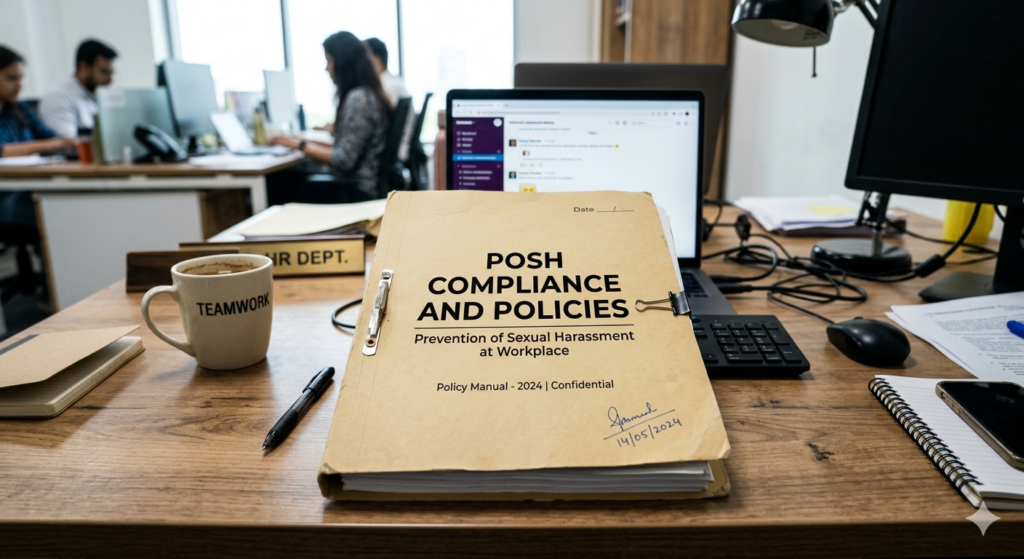
So this is why POSH awareness is no longer an HR project. For organisations that aspire to create safe, respectful, compliant, and legally sound workplaces, POSH awareness has shifted from an HR initiative to a business imperative. Organisations have to go beyond simple policies in today’s workplace and proactively foster awareness, accountability, and trust among employees. “Too many businesses still think workplace harassment prevention is all about writing a policy document or sitting for 1 annual course.
Indeed, the Prevention of Sexual Harassment of Women at Workplace Act, 2013 prescribes a duty on employers to facilitate a work environment in which employees know their rights, reporting processes, and organisational responsibilities. At Maha POSH, we believe that POSH awareness is no check box for compliance. It’s about creating workplaces where people feel respected, heard, and safe enough to contribute without fear.
This blog considers the meaning behind POSH awareness, what the law requires of employers, the pitfalls organisations commonly fall into, and how businesses can build substantive workplace awareness programmes that actually achieve impact.
What is POSH Awareness?
What it means (POSH) awareness refers to education for employees, managers, leadership groups, and Internal committee members on preventing sexual harassment in the workplace, employees’ rights, reporting systems, legal and ethical obligations regarding sexual behaviour, and respectful conduct in the workplace. The phrase originates from the Sexual Harassment of Women at Workplace (Prevention, Prohibition and Redressal) Act, 2013 or rather, the POSH Act.
The law requires employers with 10 or more employees to:
- Prevent workplace sexual harassment.
- Conduct regular awareness and training sessions.
- Establish an Internal Committee (IC).
- Create reporting and grievance mechanisms.
- Maintain confidentiality during investigations.
- Submit annual compliance reports.
POSH awareness programs are created to promote:
- What constitutes workplace harassment?
- How to spot inappropriate behaviour.
- How to safely report incidents.
The role of the Internal Committee.
Employer’s obligations in line with the law. The results of non-compliance with policy. Without strong POSH awareness, even well-crafted policies will likely go awry because staff will either not know how to use them or will not trust the process.
Why is POSH Awareness More Important Than Ever?
Over the past several years, workplaces have changed profoundly. Teams are now working in hybrid models and remote environments, co-working spaces, client locations, and virtual co-working setups. Communication occurs through emails, video calls, chats, teamwork tools and social platforms.
The changing nature of work has broadened the definitions of workplace interactions. This demonstrates the need for stronger POSH awareness across both physical and digital workplace behaviour by organisations. One wrong message (or repeated sexist remark), one nasty joke (or misuse of authority) can damage an employee’s trust and the organisation’s reputation.
The most important aspect is that employees today are much more aware of their workplace rights and organisational accountability. Companies with a poor quality of POSH awareness are on the receiving end of:
- Legal risks
- Employee dissatisfaction
- Poor retention.
- Damaged employer branding.
- Public backlash.
- Productivity loss.
- Leadership credibility issues.
Conversely, businesses that build POSH awareness cultivate environments where workers feel comfortable, respected, and appreciated. That has a direct effect on morale, collaboration, innovation and business growth. This is what the POSH Bill is in India. The POSH Act 2013 was introduced by the Supreme Court of India following its 1997 Vishakha Guidelines.
The objective was clear:
Every employee should work in a healthy working environment void of harassment.
The law applies to:
- Private organizations.
- Public sector companies.
- Startups.
- NGOs.
- Educational institutions.
- Hospitals.
- Factories.
- Shops and commercial establishments.
- Work-from-home models.
- Hybrid workplaces.
The law protects:
- Permanent employees.
- Temporary staff.
- Consultants.
- Interns.
- Freelancers.
- Contract workers.
- Trainees.
One central point most organisations miss is that workplace harassment doesn’t stop at the office.
The workplace can involve, according to the POSH Act:
- Business travel.
- Offsite events.
- Virtual meetings.
- Client locations.
- Office transport.
- Work chat or collaboration tools.
Given how relevant POSH is today in the digital-first workplace, it has never been more important.
What Looks Like Workplace Sexual Harassment?
One of the most common reasons companies require POSH awareness programs is that staff often do not identify inappropriate workplace behaviour, even when it is only a passing observation.
Under the law, sexual harassment refers to unwelcome behaviour of a sexual variety, physical, verbal, written or non-verbal.
Examples include:
Physical Conduct
- Unwanted touching.
- Physical advances.
- Invading personal space.
Verbal Conduct
- Sexually colored remarks.
- Inappropriate jokes.
- Repeated comments about appearance.
- Suggestive conversations.
Non-Verbal Conduct.
- Staring or gestures.
- Sharing explicit content.
- Displaying offensive material.
Digital Harassment.
- Inappropriate messages.
- Sending explicit memes or images.
- Harassment over video calls.
- Persistent unwanted communication.
Abuse of Authority.
- Requests for sexual favours.
- Threats tied to appraisals and promotions.
- Intimidation after rejection.
A robust presentation on POSH awareness should provide employees with a way to spot these kinds of misbehaviours at an early stage and to grasp their gravity.
The Real Aim of POSH Awareness Training.
Some companies undergo training simply because the law requires it. That doesn’t often have any consequences.
Improve POSH awareness: good POSH awareness training should focus on:
- Build employee confidence.
- Promote respectful workplace conduct.
- Combat fear when reporting.
- Establish accountability at leadership levels.
- Clarify reporting processes.
- Prevent retaliation.
- Strengthen workplace trust.
When training is interesting, realistic, and not too far away, employees also engage more easily and grasp information more effectively. At Maha POSH, we concentrate on making POSH awareness classes interactive and relevant—practical and industry-sensitive rather than legalese or esoteric. Real workplace situations make employees react more positively than long policy readings.
What One-Time Training Is Not Enough
A mistake most organisations make is holding one awareness session on their recruitment process and assuming compliance is achieved. Culture changes on one presentation do not change the culture of the workplace.
If so, POSH (POSH awareness) needs to be continuously reinforced because:
- Teams change frequently.
- New employees join regularly.
- Workplace dynamics evolve.
- Remote work brings new dangers.
- Managers need continuous accountability.
- Employees might neglect reporting processes.
Organisations should ensure that they, ideally, facilitate:
- Employee awareness sessions.
- Manager-focused training.
- Internal Committee training.
- Refresher workshops.
- Industry-tailored case studies.
- Leadership accountability sessions.
Frequent POSH awareness programs help foster sustainable behaviour change rather than occasional adherence.
Managers in the POSH Awareness.
Managers themselves have a powerful role to play in shaping workplace culture. Employees often contact managers before formally taking complaints to them. If managers are not trained properly, they might unwittingly cause things to go wrong or not handle problems properly, or they will have people complain and not keep everything confidential. That is why POSH awareness programs targeted at managers are vital.
Managers must understand:
- How to respond professionally.
- How to escalate complaints.
- What not to say about disclosures.
- Confidentiality duties.
- Retaliation prevention.
- Team culture accountability.
Organisations that neglect managerial training experience inconsistent responses to complaints and employee mistrust.
Training an Internal Committee Matters, as well.
Establishing an Internal Committee is compulsory under the POSH Act, but merely forming a committee is not sufficient. Committee members must know how to:
- Conduct inquiries
- Maintain neutrality
- Document complaints properly
- Follow timelines
- Protect confidentiality
- Prepare investigation reports
- Handle sensitive situations professionally
Without proper training, organisations risk procedural mistakes that can weaken investigations and increase legal exposure. Strong POSH awareness must include specialised capacity-building sessions for the Internal Committee.
POSH Awareness in Hybrid and Remote Workplaces
Remote work has significantly changed workplace interactions. Employees now interact through:
- Zoom meetings
- Slack channels
- WhatsApp groups
- Emails
- Collaboration platforms
- Social media
Unfortunately, inappropriate workplace behaviour has also shifted online. This makes digital POSH awareness extremely important. Employees need clarity on:
- Appropriate virtual communication
- Video meeting etiquette
- Professional boundaries online
- Recording consent
- Chat conduct
- Social media behaviour linked to work
Companies must update their POSH awareness strategies to reflect modern workplace realities instead of relying on outdated office-only examples.
Signs Your Organisation Needs Better POSH Awareness
Many organisations assume silence means everything is fine. In reality, low reporting often indicates fear, confusion, or lack of trust. Your company may need stronger POSH awareness initiatives if:
- Employees are unaware of the Internal Committee
- Policies are difficult to access
- Managers avoid sensitive conversations
- Reporting mechanisms are unclear
- Employees fear retaliation
- Training feels overly legal or robotic
- Awareness sessions are conducted only for compliance
- Workplace jokes often cross professional boundaries
- Employees hesitate to speak openly
Awareness programs should make employees feel informed and supported, not intimidated.
How POSH Awareness Improves Workplace Culture
The impact of POSH awareness goes beyond legal compliance. It improves workplace culture in several ways:
- Better Communication
Employees become more mindful of language, behavior, and boundaries.
- Higher Trust Levels
Employees feel safer reporting concerns without fear.
- Improved Retention
Respectful workplaces naturally retain talent better.
- Stronger Employer Branding
Companies known for safe work cultures attract stronger talent.
- Leadership Accountability
Managers become more conscious of their responsibilities.
- Reduced Legal Risks
Early awareness reduces incidents and procedural mistakes.
A workplace where employees feel psychologically safe often performs better overall.
Common POSH Awareness Mistakes Companies Make
Despite good intentions, many organisations make avoidable mistakes.
- Treating Training as a Formality
Employees quickly disengage when sessions feel repetitive or purely compliance-driven.
- Using Generic Content
Every industry has unique workplace dynamics. Awareness programs should reflect real scenarios employees may actually encounter.
- Ignoring Senior Leadership
POSH awareness should not be limited to junior employees. Leadership accountability is equally important.
- No Refresher Sessions
Awareness fades over time if not reinforced consistently.
- Overcomplicating Legal Language
Employees connect better with practical examples than complex legal terminology.
- Lack of Confidentiality Assurance
Employees must trust the reporting process before they feel comfortable speaking up.
How Maha POSH Builds Meaningful POSH Awareness
At Maha POSH, our approach goes beyond presentations and policy documents. We focus on creating awareness experiences that are:
- Practical
- Engaging
- Easy to understand
- Industry-specific
- Legally compliant
- Human-centered
Our POSH awareness programs include:
- Employee sensitisation workshops
- Manager accountability sessions
- Internal Committee training
- Virtual and in-person workshops
- Real-life case discussions
- Compliance guidance
- Policy support
- Annual reporting assistance
We understand that every organisation has different workplace challenges, team structures, and cultural dynamics. That is why our sessions are tailored to organisational realities instead of following a one-size-fits-all approach.
The Future of POSH Awareness in India
As workplaces continue evolving, POSH awareness will become even more important. Companies are increasingly being evaluated not just on performance but also on workplace culture, inclusivity, leadership accountability, and employee well-being. Investors, employees, clients, and stakeholders now expect organisations to actively build safe and respectful environments. Future-ready organisations will treat POSH awareness as a long-term culture investment rather than a yearly legal obligation. The companies that prioritise awareness today are the ones that will build stronger teams, stronger reputations, and stronger businesses tomorrow.
POSH awareness is not about creating fear in workplaces
It is about creating clarity, accountability, and respect. Employees deserve workplaces where they can work confidently without worrying about harassment, humiliation, or retaliation. Organisations, in turn, need systems that encourage fairness, professionalism, and trust. A well-informed workforce is always stronger than a silent one. At Maha POSH, we believe awareness is the first step toward building workplaces where respect becomes part of everyday culture, not just compliance documentation. Safe workplaces are not built by policies alone. They are built by people who understand them.